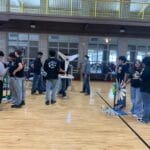
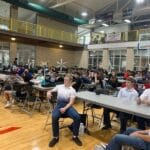
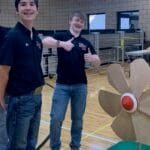
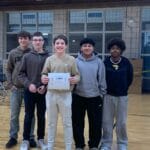
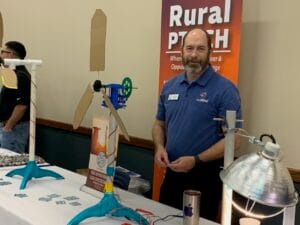
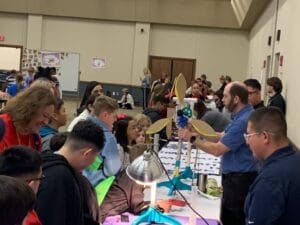
The 2026 TSTC Big Country KidWind Challenge brought together student engineers from across the region for a day of innovation, teamwork, and renewable energy exploration. Twenty teams representing five school districts — Colorado ISD, Floydada Collegiate ISD, Hamlin Collegiate ISD, New Home ISD, and Roscoe Collegiate ISD — competed in the event, designing and testing wind turbines while demonstrating their engineering and problem-solving skills.
Several teams earned the opportunity to advance to the KidWind World Challenge, which will be held May 17–20 in Madison, Wisconsin.
Advancing Teams:
Middle School Division: New Home ISD, Colorado ISD
High School Open Division: New Home ISD
High School KidWind Division: Hamlin Collegiate ISD
In addition to the advancing teams, Roscoe Collegiate ISD and Floydada Collegiate ISD received the Spirit of KidWind Award, recognizing their outstanding cooperation, sportsmanship, and team spirit throughout the competition.
Students participating in the challenge designed, built, and tested small-scale wind turbines, applying principles of physics, engineering, and renewable energy in a hands-on competition environment.
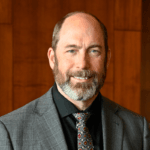
Dr. Andy Wilson Research Director at CEN
“Events like the KidWind Challenge give students the opportunity to engage deeply with real-world engineering problems while building the collaboration and critical thinking skills that drive innovation,” said Dr. Andy Wilson, Research Director at Collegiate Edu-Nation. “Seeing students from across the Big Country design solutions and compete at such a high level is incredibly exciting, and we’re proud to see several of these teams advancing to the world stage.”
The KidWind Challenge is part of a national program that introduces students to renewable energy technologies through hands-on design and experimentation. The Big Country event highlighted the growing interest and talent in STEM fields across West Texas.
Educators and organizers say the event not only fosters technical skills but also inspires students to pursue future careers in science, engineering, and energy innovation.
The teams advancing to the world competition will represent their schools and communities as they compete against top student teams from across the globe.
About Collegiate Edu-Nation Collegiate Edu-Nation partners with rural communities to create high-quality educational opportunities that prepare students for college, career, and community leadership. Visit our website at edu-nation.org to learn more.
Three Collegiate Edu-Nation Partner Districts Participate in ESC 17 STEAM Event
Dr. Andy Wilson, Director of Research at Collegiate Edu-Nation
LUBBOCK, Texas — Three Collegiate Edu-Nation (CEN) partner districts — Post ISD, Seagraves ISD, and Floydada Collegiate ISD — participated in this month’s Education Service Center (ESC) Region 17 STEAM Event, joining 22 rural school districts and Lubbock ISD for a day dedicated to innovation in science, technology, engineering, arts, and mathematics.
The ESC 17 STEAM Event brings together students, educators, administrators, and community partners from across the region to engage in hands-on learning experiences and explore emerging technologies. Participants experienced interactive workshops, robotics and coding demonstrations, engineering design challenges, and collaborative problem-solving activities designed to strengthen classroom instruction and expand access to high-quality STEAM opportunities throughout West Texas.
Students from 22 rural school districts — including Collegiate Edu-Nation partner districts — participated in the ESC 17 STEAM event.
For rural districts, events like this provide valuable exposure to advanced tools, instructional strategies, and industry-aligned learning experiences that connect classroom concepts to real-world application.
“STEAM education equips students with the critical thinking, collaboration, and innovation skills that are essential for success in today’s workforce,” said Dr. Andy Wilson, Director of Research at Collegiate Edu-Nation. “When three of our partner districts — Post, Seagraves, and Floydada Collegiate — come together with other rural schools across the region, it demonstrates a shared commitment to ensuring students in rural communities have access to the same transformative opportunities as their peers in larger districts.”
Collegiate Edu-Nation specializes in supporting rural partner districts as they design, implement, and sustain innovative programs, including comprehensive STEAM initiatives. Through strategic planning, professional development, systems alignment, and ongoing research support, CEN helps rural districts build strong academic frameworks that expand opportunities for students while honoring the unique strengths of their communities.
The participation of Post ISD, Seagraves ISD, and Floydada Collegiate ISD reflects CEN’s continued commitment to advancing innovation and expanding educational access across rural Texas.
For more information about Collegiate Edu-Nation and its work with rural partner districts, visit www.edu-nation.org
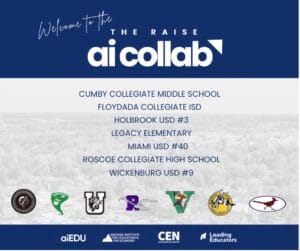
Collegiate Edu-Nation (CEN) is proud to join the RAISE AI Collaborative, a national initiative bringing together rural educators to explore the future of teaching and learning through responsible, student-centered uses of artificial intelligence.
Rural educators have long demonstrated leadership in educational innovation—whether through early adoption of distance learning models or by creatively navigating infrastructure challenges to ensure students remain at the center of learning. That same pioneering spirit is now shaping how rural schools engage with emerging AI technologies.
Through participation in the RAISE AI Collaborative, CEN is helping ensure that rural schools are not merely adapting to AI, but actively shaping how it can enhance instruction, strengthen community-rooted practices, and expand opportunities for students.
“This collaborative positions rural educators as designers and decision-makers in the AI conversation,” said Kimberly Mouser, CEN School Impact Instructional Coach. “By grounding AI use in strong instructional practices and local context, we can support teachers in leveraging these tools thoughtfully—always in service of deeper learning and student success.”
The partnership will provide participating districts with:
Professional learning focused on AI literacy and instructional practice
Opportunities to design, pilot, and refine AI-enabled strategies tailored to local needs
Ongoing coaching, collaboration, and cross-district learning to support long-term impact
District teams participating in the RAISE AI Collaborative include:
CEN extends its appreciation to Leading Educators, aiEDU, Collegiate Edu-Nation, and the Arizona Institute for Education and the Economy for convening this collaborative and supporting rural districts as they lead the way in shaping the future of AI in education.
AI is rapidly transforming education, and rural educators are essential co-creators in determining how these tools are used to benefit students, schools, and communities.
The Collegiate Education Network (CEN) recently hosted a Virtual Professional Learning Community (VPLC) session titled SWAP It Up: Fast Moves, Real Impact, led by Dr. Chantel Schulz. The session focused on helping educators rethink reteaching—showing that effective instructional adjustments don’t require starting over, slowing down, or redesigning lessons from scratch.
The VPLC challenged a common assumption in classrooms: that reteaching must be time-consuming or complex to be effective. Instead, participants explored how small, intentional instructional moves—such as a 1–3 minute micro-lesson, a single clear model, a brief guided practice, and a quick check for understanding—can lead to meaningful gains in student learning.
At the core of the session was SWAP, the Student Work Analysis Protocol, a practical and repeatable system that helps teachers quickly move from collecting student work to making precise instructional decisions. Through SWAP, educators learned how to identify essential learning, align tight success criteria to exit tickets, and efficiently sort student work to determine next steps—without added overwhelm.
A key highlight of the session was the introduction of the 1-1-1 method for unpacking TEKS and establishing clear success criteria:
One verb – what students must do
One big idea – what students must understand
One product – how mastery is demonstrated
This streamlined approach, when paired with real-time performance tracking and short reteach cycles, helps shorten the turnaround time for instruction and accelerates students’ progress toward mastering the TEKS.
The SWAP It Up session is part of CEN’s ongoing Virtual PLC offerings facilitated by the organization’s School Impact Team. CEN provides monthly VPLCs twice each month, designed as 30-minute sessions that deliver practical, immediately applicable learning. Topics focus on high-impact instructional strategies as well as deeper dives into all things P-TECH, supporting educators and leaders in strengthening college and career pathways for students.
Dr. Schulz developed the Virtual PLC and accompanying leader handout to ensure the strategies could be immediately applied in classrooms and shared across campuses. The printable handout is available as a resource for instructional leaders to support consistent, high-impact reteaching practices.
Interested in joining these conversations and learning opportunities? Educators, instructional leaders, and district teams are invited to participate in CEN’s Virtual PLCs and engage in collaborative learning focused on what works—right now, in real classrooms. Learn how to join upcoming sessions and access the SWAP It Up handout by connecting with Dr. Schulz at cschulz@edu-nation.org.
How to Connect:
Chief of Schools: Michelle Carroll Smith – msmith@edu-nation.org
CTE Specialist: Dr. Chantel Schulz – cschulz@edu-nation.org
P-TECH Director: Kelly Springfield – kspringfield@edu-nation.org
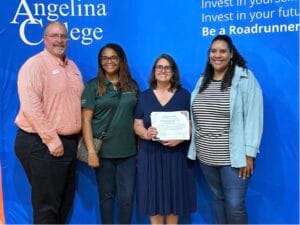
Collegiate Education Network (CEN) proudly announces that Melinda Brasuell, Edu-REACH Coach, has been named a recipient of the 2025 Michael Carano Teacher Excellence Award, an honor presented by the Electronics Foundation to recognize outstanding educators advancing student success in electronics manufacturing and workforce development.
Brasuell was recognized for her impactful work with Diboll ISD and Diboll High School, where she has supported students through the district’s P-TECH program and Pre-Apprenticeship pathways, helping students gain industry-aligned skills and credentials that lead directly to employment opportunities.
“Being chosen for the Michael Carano Teacher Excellence Award for 2025 is a huge honor, and I am very grateful. This award reflects the work I have done for Diboll ISD and Diboll High School through their P-TECH program and Pre-Apprenticeships,” Brasuell said. “The work will continue through Collegiate Education Network Edu-REACH to help students explore career opportunities and develop real-world skills so they can end generational poverty and live in their rural areas.”
Through partnerships with the Electronics Foundation and the Deep East Texas Workforce Commission, Brasuell has helped bridge education and industry, ensuring students graduate with meaningful credentials and career-ready experience. As a result of this work, five graduating seniors earned micro-credentials that supported their successful placement into entry-level positions with Lockheed Martin in Lufkin, Texas.
“Teaching is more than lessons—it’s about helping students discover their strengths and preparing them for the future,” Brasuell shared. “This recognition inspires me to keep finding new ways to support and engage every student.”
The Michael Carano Teacher Excellence Award highlights educators who demonstrate innovation, leadership, and measurable impact in preparing students for high-demand careers in electronics manufacturing and related fields.
“I am proud to have been recognized for my work with students in their academic and career pursuits in Electronics Manufacturing and motivated to continue giving my best every day,” Brasuell added.
Collegiate Education Network’s Edu-REACH initiative focuses on expanding access to career pathways, postsecondary credentials, and workforce-aligned learning opportunities—particularly in rural communities—so students can thrive where they live and work.
For more information about the Electronics Foundation and its mission, visit the Electronics Foundation website.
It was my pleasure to be invited to judge 3rd grade student-directed research projects at Roscoe Collegiate ISD this fall. A few minutes after 8:00, the first group of 3rd-grade students entered the room — nervous, unsure, and determined to just get through the next few minutes. One by one, they walked us through their projects, pointing proudly to charts, drawings, and data they had gathered themselves. When they finished, they looked up and asked the judges, “Do you have any questions?” We certainly did. Each team fielded five or six questions — enough to check for understanding, theirs and ours.
As the morning went on, more groups rotated through. By the final rounds, the students were noticeably more confident, and the judges had sharpened their questioning. What Seaman Knapp, the father of cooperative extension, once said rang true: “What a man does, he cannot doubt.” Students who conduct their own research cannot doubt what they have learned. But conducting research without presenting to a panel of local judges is like cake without icing. Students deepen their learning by teaching, and judges walk away inspired by what is happening “up there in that school.” It strengthens community ties and builds advocates for the district.
Are you implementing student-directed research in your school? After 13 years of success at Roscoe Collegiate ISD — including national-level recognition — this remains the most powerful strategy I’ve seen for preparing students to think, solve problems, and fail forward. Research in Roscoe is now under the leadership of Student Research Director, Kayla Graves. If you would like to pick her brain about student-directed research, I would be happy to put you in touch with her. I would also be excited to visit with you about bringing this work to your district.
Seasoned rural education leader brings 17+ years of experience advancing postsecondary and workforce pathways across Texas
Collegiate Edu-Nation (CEN), a Texas-based nonprofit dedicated to strengthening rural education and workforce systems, is proud to announce Jeff Walker as its new President.
Walker brings more than 17 years of frontline experience in public education and community leadership, with a career defined by building authentic partnerships, strengthening postsecondary pathways, and expanding economic mobility for students in underserved and rural communities across Texas.
“Jeff Walker is exactly the kind of leader this moment requires,” said Dr. Kim Alexander, CEO and Founder of Collegiate Edu-Nation. “He understands rural systems at a deep level, leads with integrity, and brings a rare ability to align education, workforce, and community partners around a shared vision. Jeff’s leadership will help accelerate our mission and expand high-quality pathways for learners across the state.”
Most recently, Walker served as Executive Director of Partners for Rural Impact (PRI) in East Texas, where he led collaborative efforts to align education, workforce, and community systems to better support students and families. In this role, he worked closely with school districts, community organizations, higher education partners, and regional leaders to elevate collective impact and deepen postsecondary and career readiness in rural regions.
Prior to PRI, Walker served as Director of an Alternative Education Campus within a five-district cooperative, focusing on credit recovery, individualized postsecondary navigation, and community partnership-building to support at-risk students. Earlier in his career, he served as both a teacher and principal in East Texas public schools—experiences that continue to shape his commitment to student-centered systems change.
Outgoing President Dr. Rachael McClain reflected on the leadership transition, stating, “It has been an honor to serve Collegiate Edu-Nation during a period of growth and impact. Jeff’s deep understanding of rural communities, combined with his collaborative leadership style, positions him well to carry this work forward. I am confident in his ability to lead CEN into its next chapter while staying grounded in our mission and values.”
Walker expressed a strong sense of purpose in stepping into the role, emphasizing the importance of aligned systems and shared responsibility. “I believe deeply that when educational systems, community leaders, and regional partners come together with a shared purpose, it unlocks better pathways for students and their families to achieve lasting economic mobility,” said Walker. “At a time when our economy and workforce are changing faster than ever, I feel a strong responsibility to champion this work. It’s my calling and my purpose.”
As President, Walker will focus on leading with clarity, empowering rural leaders, and strengthening the partnerships and infrastructure needed to expand high-quality education and workforce pathways across Texas.
Walker holds a Bachelor of Science from Hardin-Simmons University and a Master’s degree in Educational Leadership from Stephen F. Austin State University.
About Collegiate Edu-Nation
Collegiate Edu-Nation (CEN) is a Texas-based nonprofit dedicated to transforming rural education and workforce systems through innovative pathways that connect learners to postsecondary credentials, high-demand careers, and long-term economic mobility.
Gay Hibbitts, a proud Throckmorton High School graduate, was born and raised just two blocks from the school she now calls home as a teacher. After raising her three sons and caring for her parents through their battles with cancer, she felt a deep pull back to the classroom—but wasn’t sure where to begin.
“I always wanted to be a teacher,” she said. “I just didn’t know how to begin.”
That changed the day Kristina Gaspar, a local education leader, introduced her to AmeriCorps’ Teach Where It Matters program—an initiative that partners with Collegiate Edu-Nation (CEN) to support aspiring rural educators in earning their degrees while gaining hands-on classroom experience.
“Kristina told me, ‘There’s a program that would be wonderful for you. You have so much to give,’” she recalled. “Eventually, I started believing it myself.”
Now teaching 3rd- and 5th-grade social studies and 6th-grade technology, she’s seeing the difference every day. Her sixth graders—who started the year typing with one finger—are now writing full paragraphs, creating slide presentations, and communicating online with confidence.
“They just finished a 20-slide project called If I Was,” she said proudly. “These are life and college skills they’ll use forever.”
Through Teach Where It Matters, she’s found not only professional growth but also a family of mentors and peers who walk alongside her. “My mentor, Amy Dick, checks on me every morning—asking if I’m okay or need anything,” she shared. “She helps with lesson plans, makes sure we’re meeting standards, and keeps us from feeling overwhelmed. People like her—and CEN—don’t walk behind you. They walk beside you.”
“People like her—and CEN—don’t walk behind you. They walk beside you.”
The support has fueled her confidence as she approaches a major milestone: graduating from West Texas A&M University in May 2025. And she already knows what’s next—continuing her journey at Throckmorton ISD, possibly expanding into Career Pathways, a program she’s studying now and hopes to teach soon.
When asked what keeps her going, her answer is simple: “The kids.”
Her story is one of perseverance and heart—a reminder that it’s never too late to follow a calling, especially when you have a community that believes in you.
“This was a dream. This was my passion,” she said. “And it’s something I hope I can succeed at—and make a difference in somebody’s life.”
CORONA, N.M. – The New Mexico Department of Workforce Solutions announced yesterday the launch of the first-of-its kind Rural Education-Workforce Collaborative, a $400,000 statewide initiative connecting early education and P-12 instruction in rural school districts with workforce development opportunities to prepare students for high-demand careers.
This transformative model will expand access for rural students by integrating education and workforce resources such as dual credit programs, free college tuition and work-based learning opportunities including apprenticeships, pre-apprenticeships and internships. Together, these programs will create robust pathways for career training, reskilling, and upskilling to meet New Mexico’s emerging workforce needs.
“This workforce-school partnership tackles several challenges at once by connecting education to real world opportunities from the earliest stage, creating opportunities for rural youth and building our workforce in climate-ready and infrastructure careers,” said Sarita Nair, NMDWS Secretary. “Building on Governor Lujan Grisham’s historic investment in early education and tuition-free college, the collaborative will demonstrate how much we can accomplish when we join forces with innovative rural school districts and the local workforce development board to give students true options for their futures and strengthen New Mexico’s economy.”
The P-20 approach emphasizes multiple entry points and stackable credentials, creating seamless, inclusive transitions between education, career technical training, and employment aligned to regional and local economic priorities. Funded through the legislative approved Community Benefit Fund, this 18-month project will build a comprehensive, student-centered education and workforce continuum.
“The current landscape for rural career technical education struggles to connect students to real world opportunities that align with regional industry trends,” said Lee White, Superintendent Loving Municipal Schools. A collective partnership has been formed between Workforce Development, Pre-K-12 rural districts, higher education entities and Collegiate Edu-Nation that will tandemly establish these opportunities and measure success through a data point system. I believe that we are on the cusp of effectively changing student outcomes through this model and partnership.”
“We created the Community Benefit Plan to spark exactly this type of creative partnership,” said Senate President Pro-Tem Mimi Stewart. “This investment will give young people real skills and paths to stay in the rural communities they love while building our state’s capacity to face the challenges of a changing climate and economy.”
“The Eastern Area Workforce Development Board is very excited about the work being performed through the collaborative,” said Executive Director Beth Elias. “This work will not only provide expanded opportunities for rural residents to access workforce resources but will also help provide opportunities for communities to retain emerging talent.”
A key feature of the project is its multi-sector collaboration, bringing together state and local agencies in workforce development, early childhood, K-12 and higher education. The initiative prioritizes underserved populations, including economically disadvantaged and first-generation students, students with disabilities, and students from tribal communities.
To ensure accountability and measurable impact, the project will establish a data dashboard to track academic and workforce outcomes over time. This data-driven approach will support continuous improvement, inform decision making, and strengthen educational and workforce results statewide.
###
The New Mexico Department of Workforce Solutions (NMDWS) oversees the New Mexico public workforce system. The department is committed to supporting the business community through special recruitment, analyzing hard to fill jobs, layoffs, job fairs, and skills assessments for hiring; and assisting New Mexicans seeking employment opportunities with job search, job referrals and placement, and customized skill development such as interviewing skills and resume writing. The department administers programs to include business services; workforce training; Unemployment Insurance; labor law enforcement; veterans’ services; and labor market information. In 2025, NMDWS expanded to include the Office of Housing.
From the very start of her career in healthcare, Brittany Baumbach knew she wanted more. “I’ve been working in healthcare since I was 18,” she shares, “and as rewarding as each step has been, I always felt I wasn’t quite where I was meant to be.”
The spark to return to school came from a deeply personal place: her children and her baby sister. She wanted to show them that “nothing is impossible. You can set goals and crush them at any age, no matter your circumstance!” Another powerful influence was her best friend’s father, a chiropractor who returned to school to become an FNP. “He was my only true father figure,” she says. “When he passed last year, it lit a fire underneath me to continue and make him proud.”
“You can set goals and crush them at any age, no matter your circumstance!”
Growing up in poverty, Brittany always dreamed of a better life for herself and her children. That drive has guided her through the challenges of balancing work, family, and school. “Staying disciplined is my biggest challenge,” she admits. “I have to set aside designated times for schoolwork—but I’m learning I can do hard things.”
Her proudest achievement so far? Buying her childhood dream home—a milestone she celebrates alongside her academic progress. Support from the Big Country Rural Healthcare Hub has been instrumental. “They keep me on task, hold me accountable, and celebrate life’s successes with me,” she says.
Connecting with Collegiate Edu-Nation (CEN) has been another key part of her journey. Weekly check-ins and a supportive community help her stay on track and feel less alone in her studies. “One of our last meetings hit me—I’m almost at the finish line,” she recalls. Through CEN, she’s also discovered opportunities like UTA’s BSN program and local clinical placements, bringing her dreams closer to home.
“One of our last meetings hit me—I’m almost at the finish line,” she recalls.
Looking forward, Brittany is focused on completing her prerequisites and entering UTA’s BSN program, with a long-term goal of becoming a Psychiatric Mental Health Nurse Practitioner. Her advice to anyone considering a similar path? “Don’t get overwhelmed. Take it one class at a time. You can do 5 weeks of anything. You got this!”
Her story is a testament to the mission of CEN: opening doors for rural and underserved communities, showing that education can transform lives—even when life feels unpredictable. “Life is truly a beautiful mystery,” she reflects. “One day I’m working as an LVN in a correctional facility, the next I’m following my dreams. And I hope my story inspires others to do the same.”
Dr. Susan Holley received her EdD in Educational Administration from Baylor University in 1991. For 34 years, Dr. Holley served in public schools in the roles of teacher, counselor, principal, central office administrator, and superintendent. She received the Texas Council of Women School Executives State Leadership Award and served on the state board for both the Texas Rural Education Association and the Texas Association of Rural Schools. Dr. Holley was Associate Executive Director for School Transformation and Leadership Services at the Texas Association of School Administrators (TASA) for nine years before joining the Department of Educational Administration and Human Resources (EAHR) at Texas A&M University in 2017 as Clinical Associate Professor. Dr. Holley teaches courses in principalship, superintendency, and organizational change, and supervises the principal practicum experience.
At Texas A&M University, Dr. Holley is the director of the John R. Hoyle Memorial Administrative Leadership Institute (ALI) and serves on the Council for Educator Preparation Programs and the department’s Executive Committee.
Alton Frailey, a native of Nacogdoches, Texas, is a veteran professional educator of more than 35 years.
Frailey retired in 2016 after serving as superintendent of the nearly 74,000-student Katy Independent School District near Houston, Texas for nine years. He has served as superintendent of the DeSoto Independent School District near Dallas, Texas and as Superintendent of Schools for Cincinnati Public Schools in Cincinnati, Ohio. From March 2018 through March 2020 he served as Interim Superintendent for the Nacogdoches Independent School District.
Frailey has held numerous professional elected leadership positions including President of the American Association of School Administrators (AASA), President of the Texas Association of School Administrators (TASA), President of the Urban Superintendents Association of America (USAA), President of the Texas Association of Suburban/Mid-Urban Schools (TAS-MUS), and Chairman of the University Interscholastic League Legislative Council.
Frailey has also served on various civic boards. In 1999, he was elected to the Cypress-Fairbanks Independent School District Board of Trustees, which was selected as the 2002 Texas Honor Board. In 2015, Texas Governor Gregg Abbott appointed Frailey to the Stephen F. Austin State University Board of Regents for a six-year term. He currently serves as Chair of the board. He works with the Flip Flippen Group as one of three members of the LeadWorthy Board and is Chair of the Capturing Kids’ Hearts Foundation Board. He also serves as a member of the Board of Directors for Battelle for Kids. Additionally, he has served on the board of directors for the Katy Area Chamber of Commerce, Katy Area Economic Development Council, Junior Achievement of Southeast Texas, West Houston Association, and The Bible Seminary.
He is currently President of Alton L. Frailey & Associates, LLC, specializing in leadership development, community engagement, school board team building, and executive coaching.
He and his wife, Anissa, have been married thirty years and live in Fulshear, Texas.
Dr. Susan Holley received her EdD in Educational Administration from Baylor University in 1991. For 34 years, Dr. Holley served in public schools in the roles of teacher, counselor, principal, central office administrator, and superintendent. She received the Texas Council of Women School Executives State Leadership Award and served on the state board for both the Texas Rural Education Association and the Texas Association of Rural Schools. Dr. Holley was Associate Executive Director for School Transformation and Leadership Services at the Texas Association of School Administrators (TASA) for nine years before joining the Department of Educational Administration and Human Resources (EAHR) at Texas A&M University in 2017 as Clinical Associate Professor. Dr. Holley teaches courses in principalship, superintendency, and organizational change, and supervises the principal practicum experience.
At Texas A&M University, Dr. Holley is the director of the John R. Hoyle Memorial Administrative Leadership Institute (ALI) and serves on the Council for Educator Preparation Programs and the department’s Executive Committee.

 The Collegiate Education Network (CEN) recently hosted a Virtual Professional Learning Community (VPLC) session titled SWAP It Up: Fast Moves, Real Impact, led by Dr. Chantel Schulz. The session focused on helping educators rethink reteaching—showing that effective instructional adjustments don’t require starting over, slowing down, or redesigning lessons from scratch.
 Collegiate Education Network (CEN) proudly announces that Melinda Brasuell, Edu-REACH Coach, has been named a recipient of the 2025 Michael Carano Teacher Excellence Award, an honor presented by the Electronics Foundation to recognize outstanding educators advancing student success in electronics manufacturing and workforce development.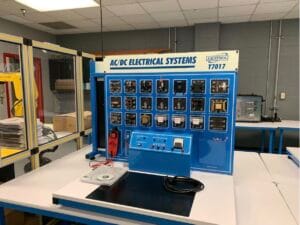
 Collegiate Education Network’s Edu-REACH initiative focuses on expanding access to career pathways, postsecondary credentials, and workforce-aligned learning opportunities—particularly in rural communities—so students can thrive where they live and work.

 Seasoned rural education leader brings 17+ years of experience advancing postsecondary and workforce pathways across Texas

 e shares, “and as rewarding as each step has been, I always felt I wasn’t quite where I was meant to be.”